By now, you’ve probably heard about the major hack that occurred on Twitter. The accounts of Elon Musk, Bill Gates, Coinbase, Gemini, Barack Obama, Apple and others were taken over by bad actors on Wednesday.
Once this individual (or group) successfully hacked all these huge accounts, they could have done virtually anything. But instead they ran a really poorly-executed Bitcoin scam.
Here’s what it looked like:
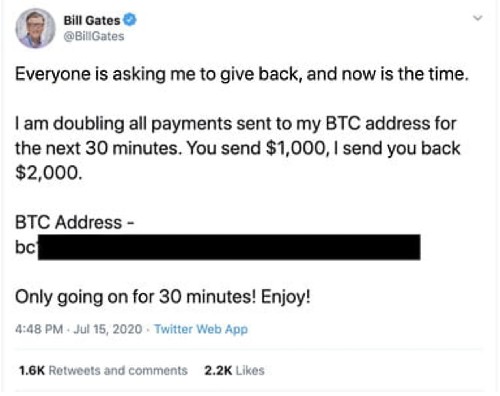
This is a classic crypto scheme. It’s been run millions of times around the world. Luckily it has a very low success rate. This time the hackers only got around $100k in Bitcoin — despite the fact that the accounts they hacked have at least 100 million followers combined.
We’re fortunate that the scammers weren’t more imaginative or devious. They could have done some truly evil things using those accounts.
Always Be Wary
We’re entering a very interesting time for the internet. The web is more important to both our business and personal lives than ever before. And that means we need to be extra cautious when using it.
I’ve been receiving a ton of scam attempts lately. They text me, email me and call me. Some of them have gotten very clever. So unless I know exactly who a message is from — and what it’s about — I handle it with caution.
The sophistication of these attacks will only increase over time. This latest big hack should be a wake-up call to us all. Make sure your passwords are secure. Use long, random passwords, and write them down somewhere safe. Don’t use the same password for more than one account. Be especially careful with your email, bank, and crypto exchange passwords.
Don’t click on links you aren’t 100% sure are legit. If you get an email from your brokerage or exchange, don’t click on any links in it. It’s safer to go to your browser and enter the web address manually. Or bookmark it. Whenever you click on a link in an email or text, there’s a chance it’s from a hacker. It’s better to go directly to the website.
Try to avoid downloading unnecessary programs to the computer you use to log into important accounts. Don’t install browser extensions unless they are 100% reputable and legitimate.
It’s unfortunate that we have to take these measures. But they are absolutely necessary in today’s world. Be safe out there folks!